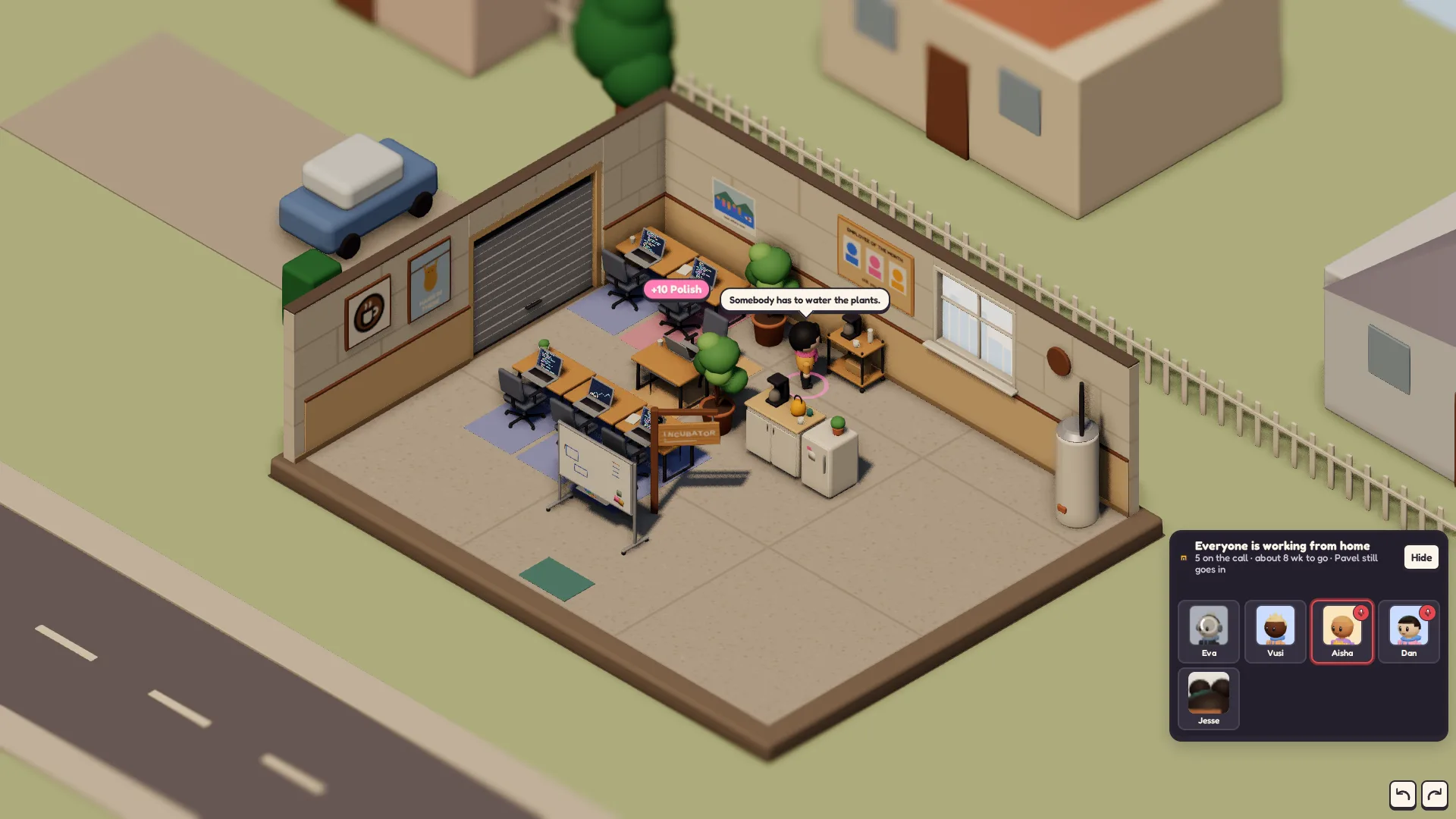
People, not headcount
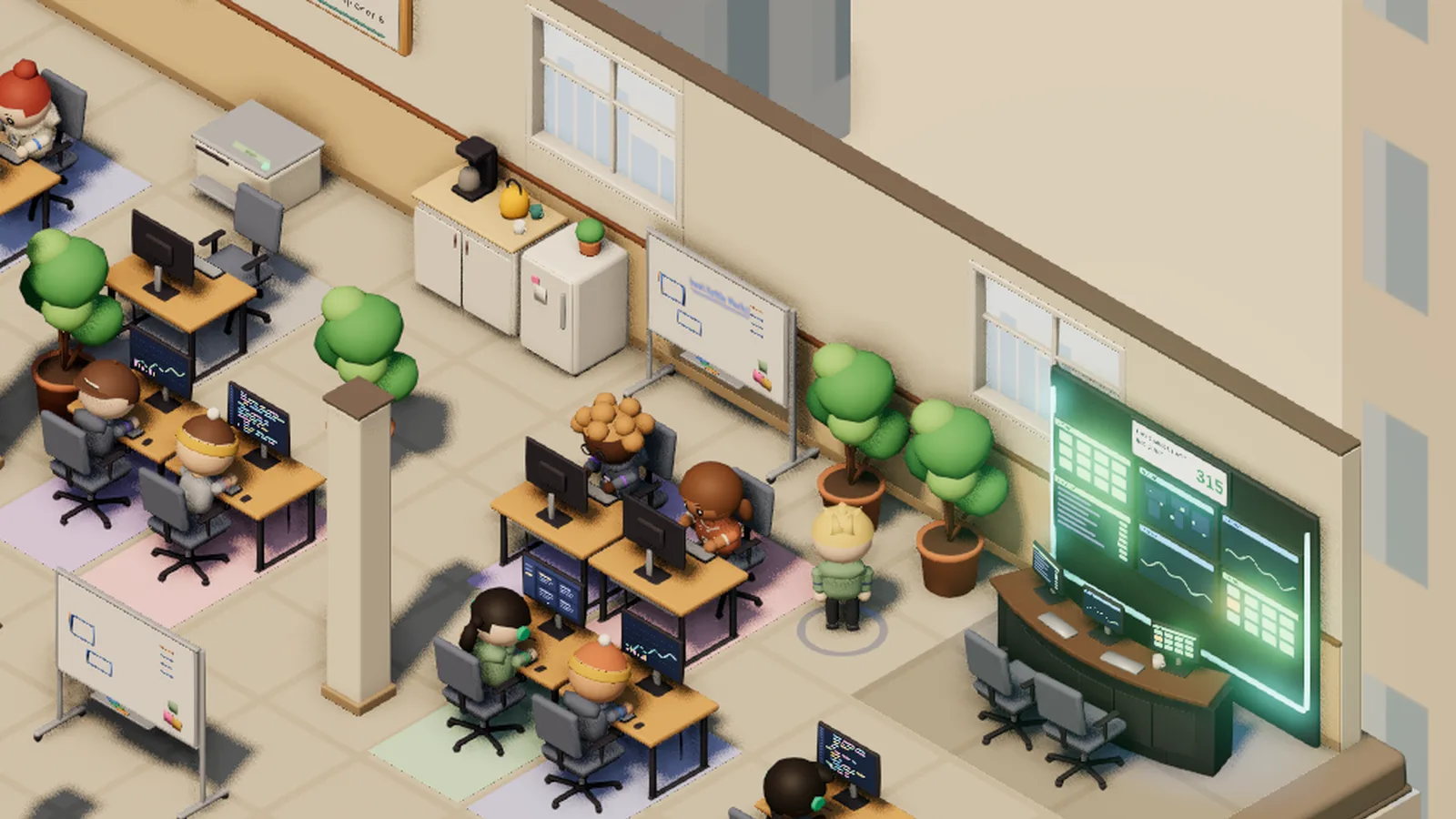
Everyone has a desk, a mood and a breaking point. Automate the work they were proud of and they coast, burn out, then leave.
Hire humans. Ship products. Call the outage a stress test.
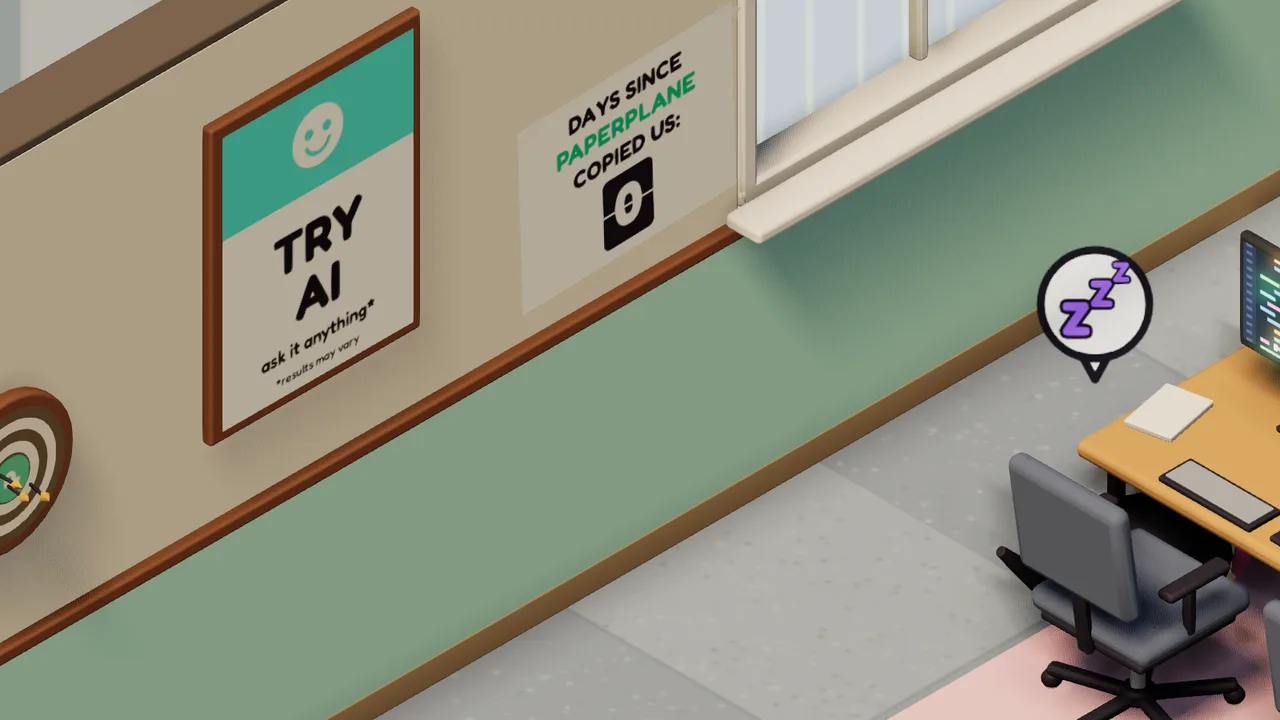
A management sim about running a software company through the AI era. Hire humans, ship products, survive the outages, and decide how much of the work the machines should do.
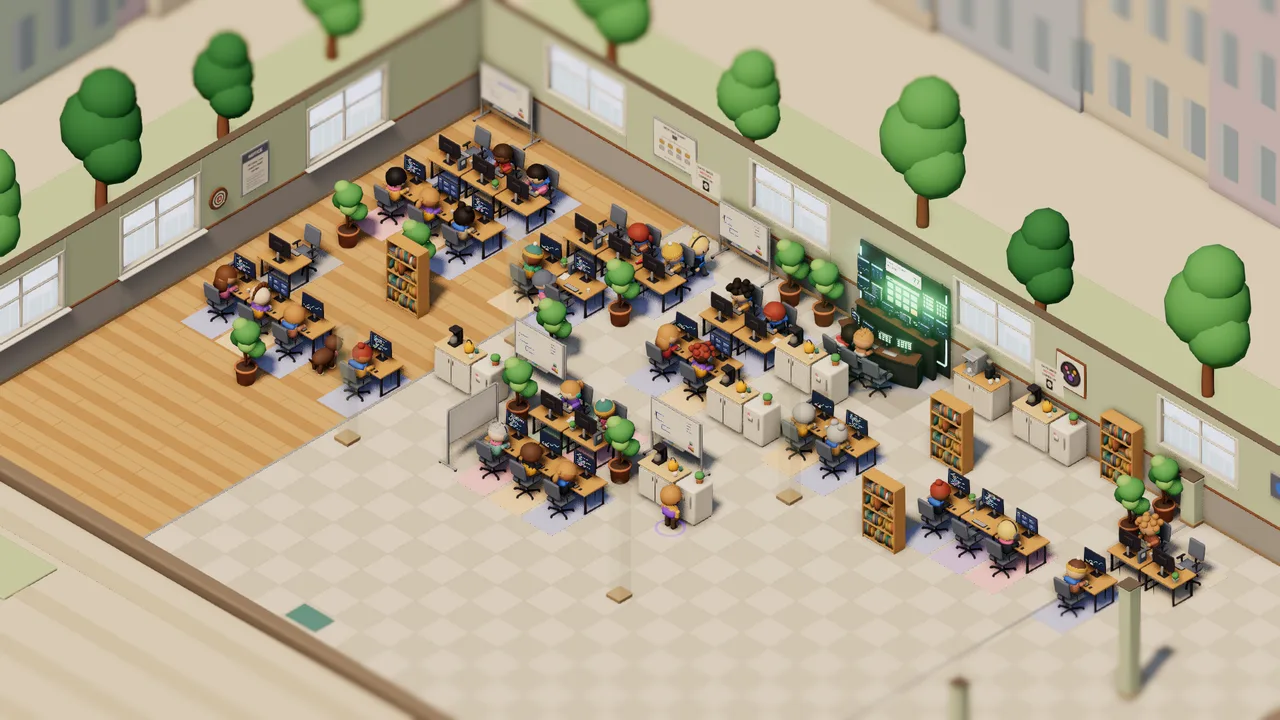
Survive the AI eras. First chatbots. Then agents. Then whatever the agents hire.
Everyone has a desk, a mood and a breaking point. Automate the work they were proud of and they coast, burn out, then leave.
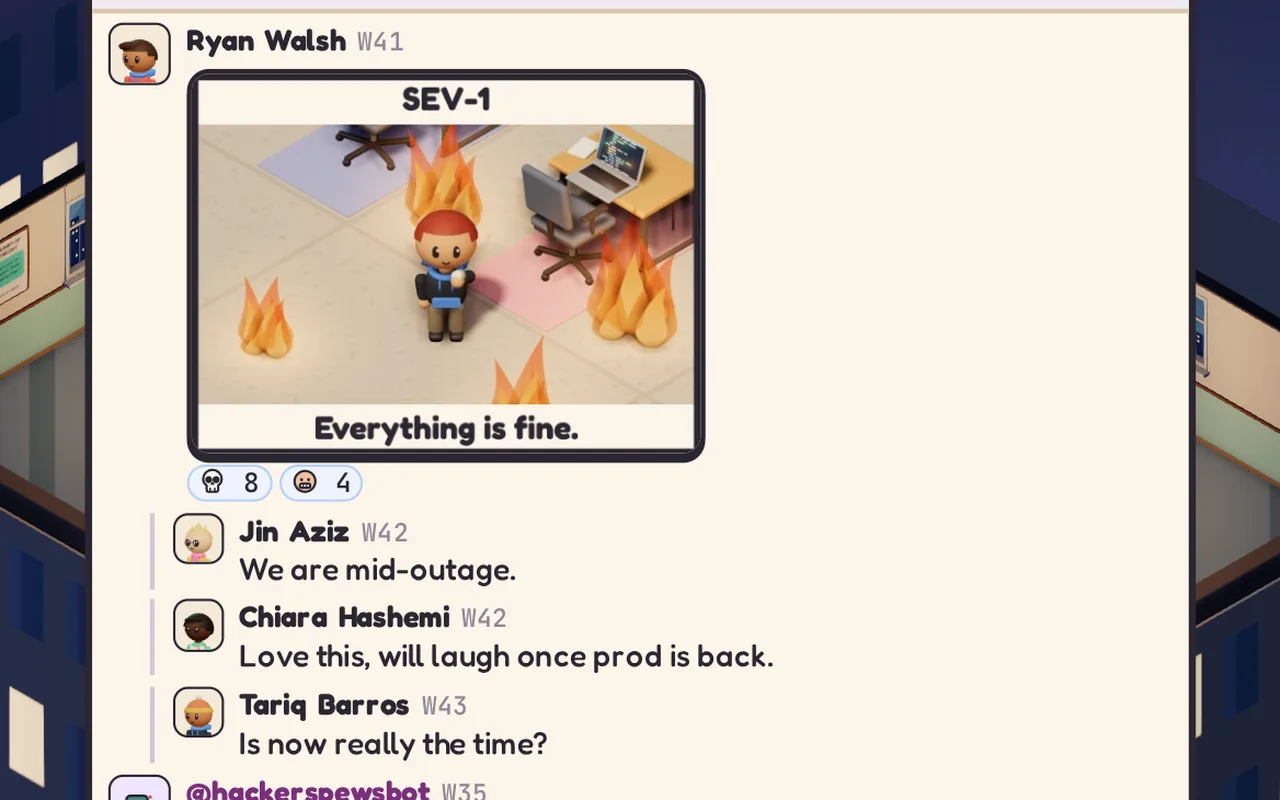
Answer your team's threads, or post a pep talk, a meme or "who broke prod?" yourself. They react, they reply, and they argue back. A meme during an outage gets the reaction it deserves.
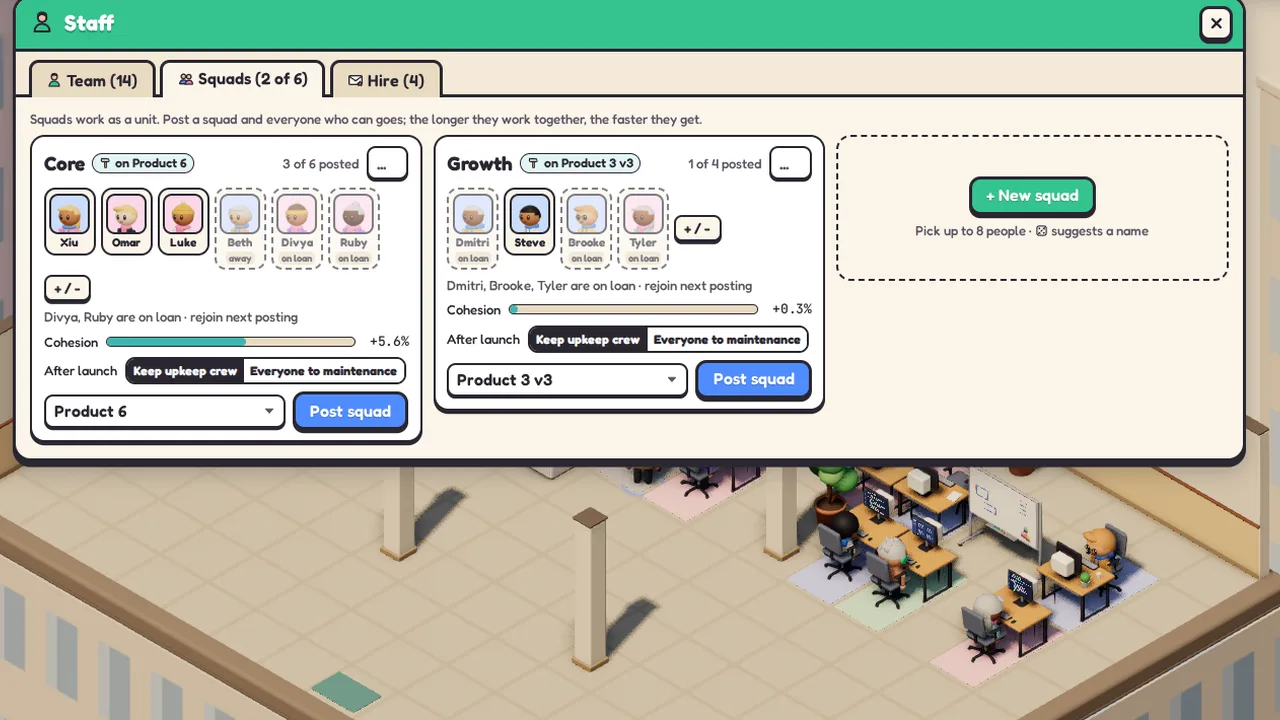
Name a team, give it a lead and post it to a project. The longer a squad works together, the faster it ships. When the product launches, the people who know it best stay on to keep it running.
Pick a category and an angle, build, launch, and let TechCrunchy decide how you feel about it. Some combos are brilliant. Some are AI-powered spreadsheet number 47.
Rogue agents, breaches and outages at 3am. Red lights, people running, and a call to make before the customers notice.
Big calls show up in the office: a novelty cheque the size of a door, a whiteboard that says the market has spoken, the founders hiding while a stranger tries the product.
Agents are cheaper than people, right up until the cloud bill develops feelings. Hand the work to the machines and watch the rack run hot, the pull requests pile up overnight, tech debt piles up wherever reviews slip, and the people who used to do it find something else to care about.
Reward your team with waffles. And a mandatory dance break. Nobody asked for the dance break.
Swipe or use the arrows. With the gallery focused, use Left/Right or Home/End.
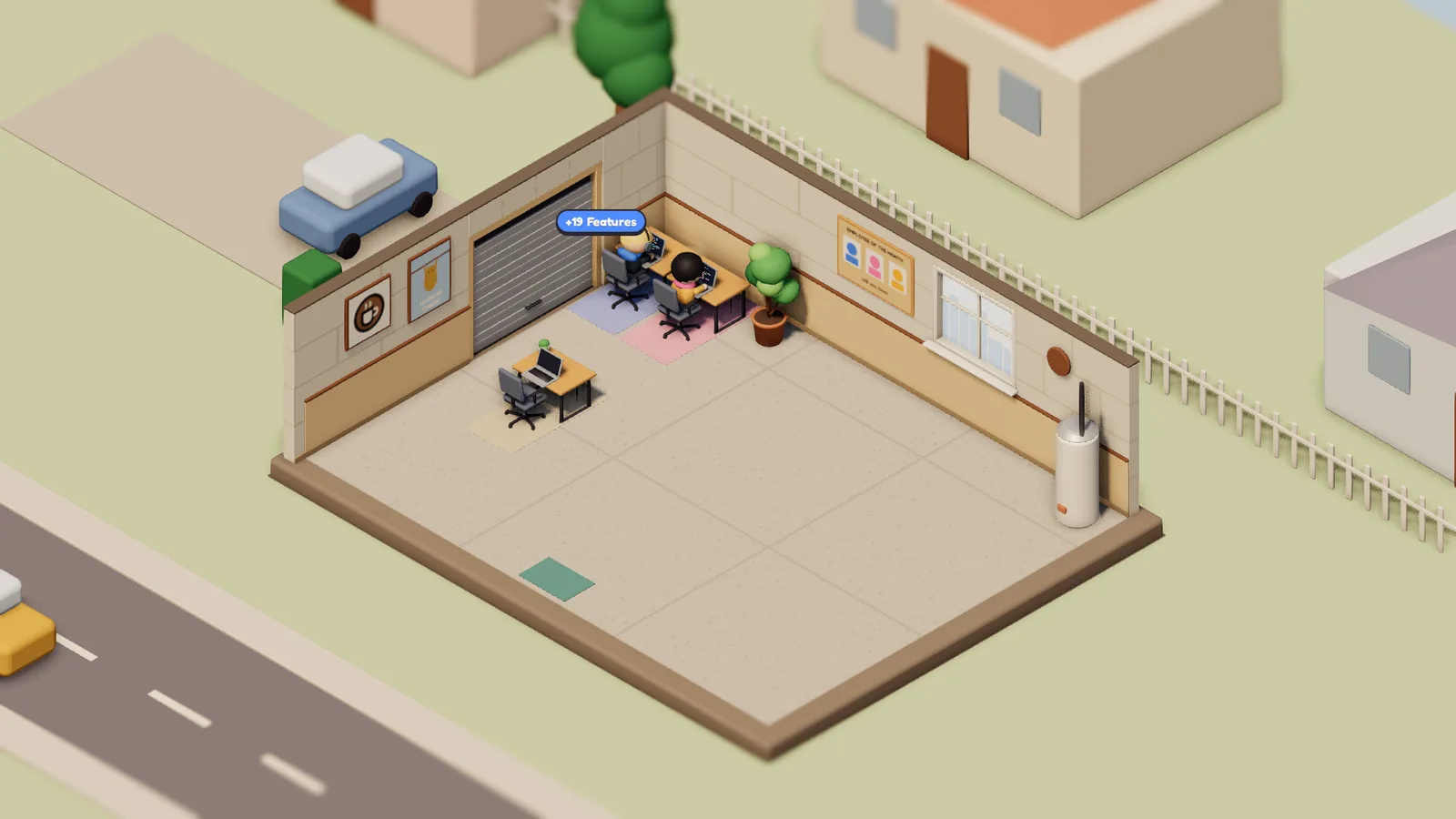
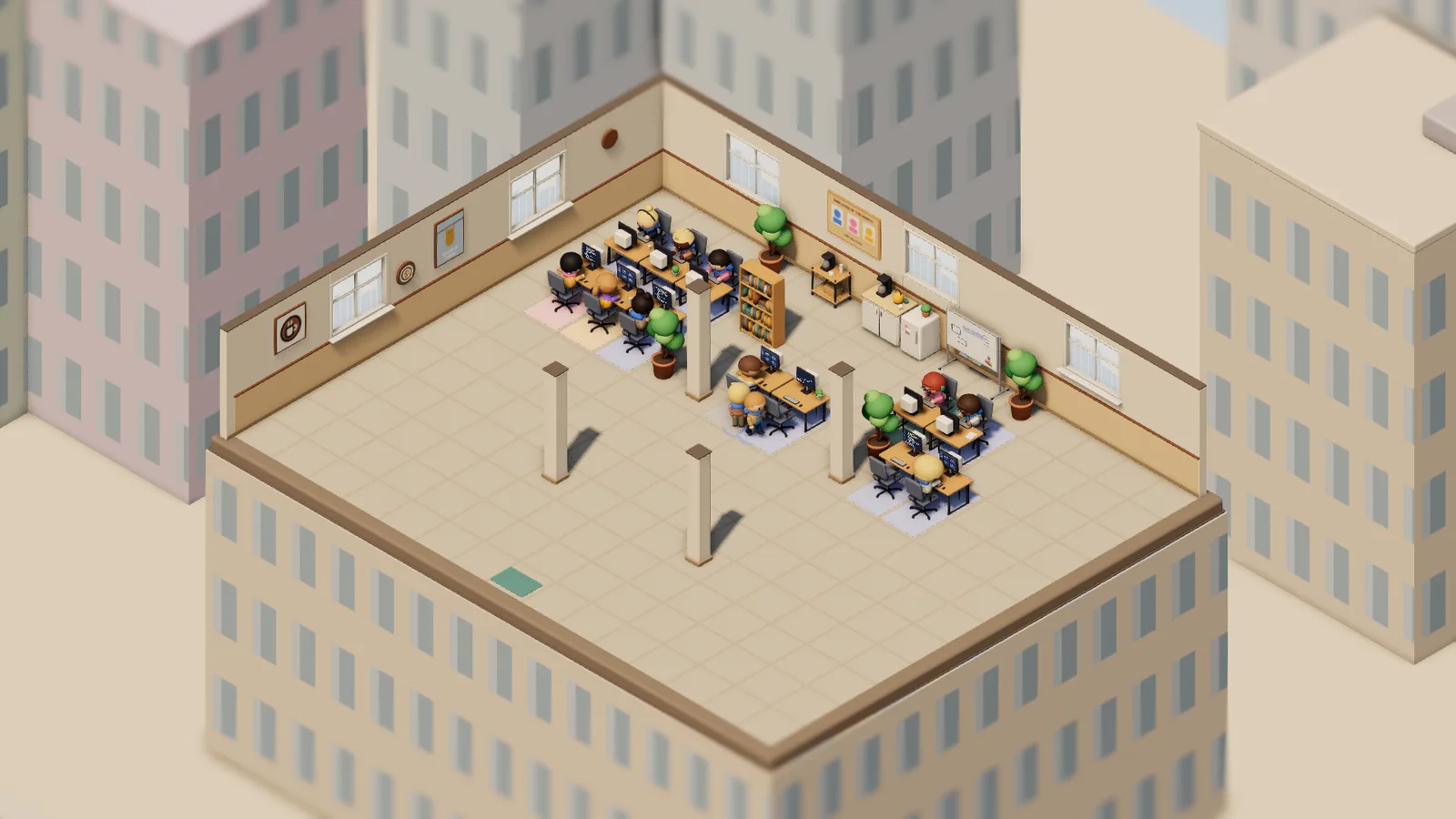
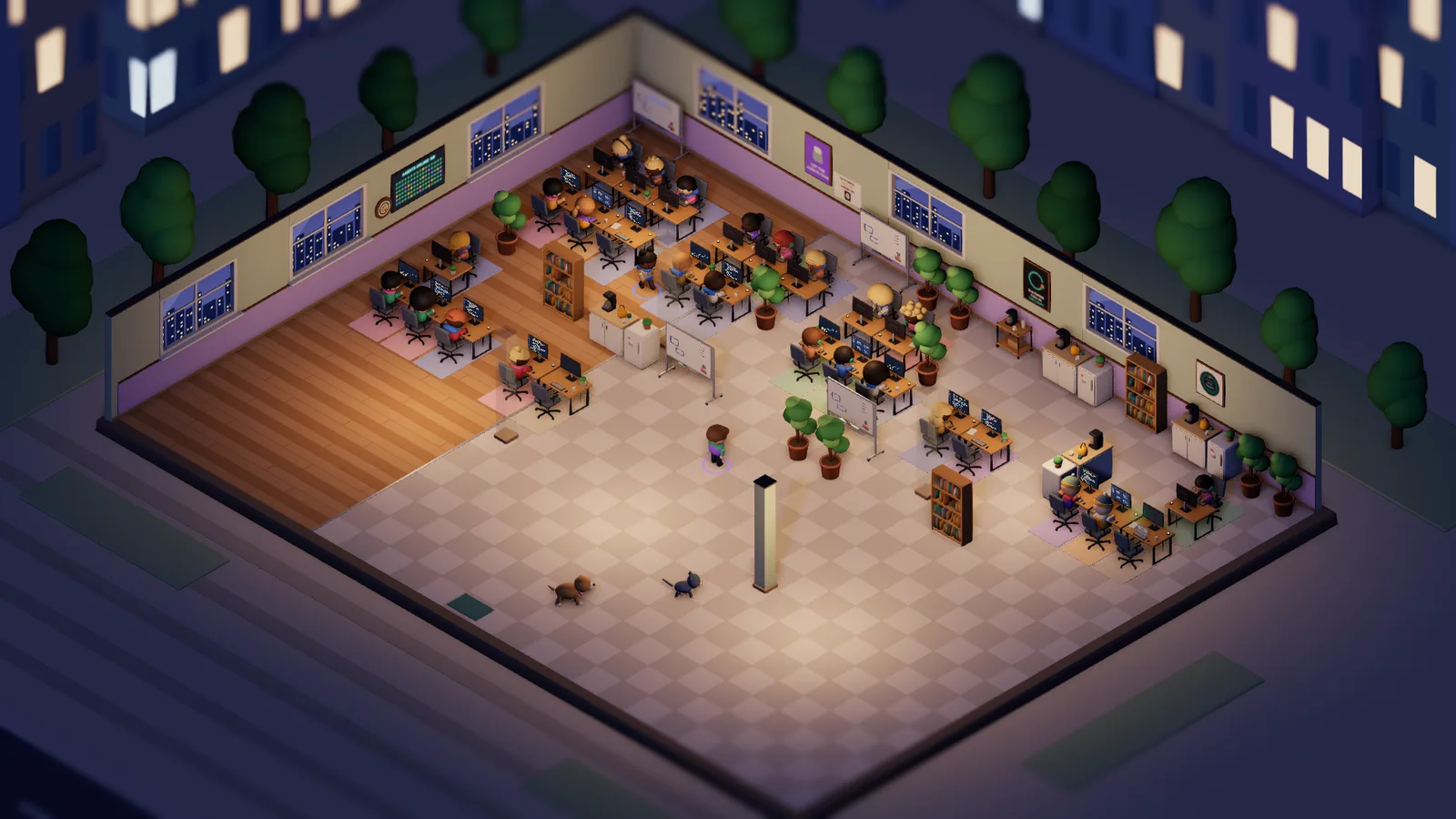
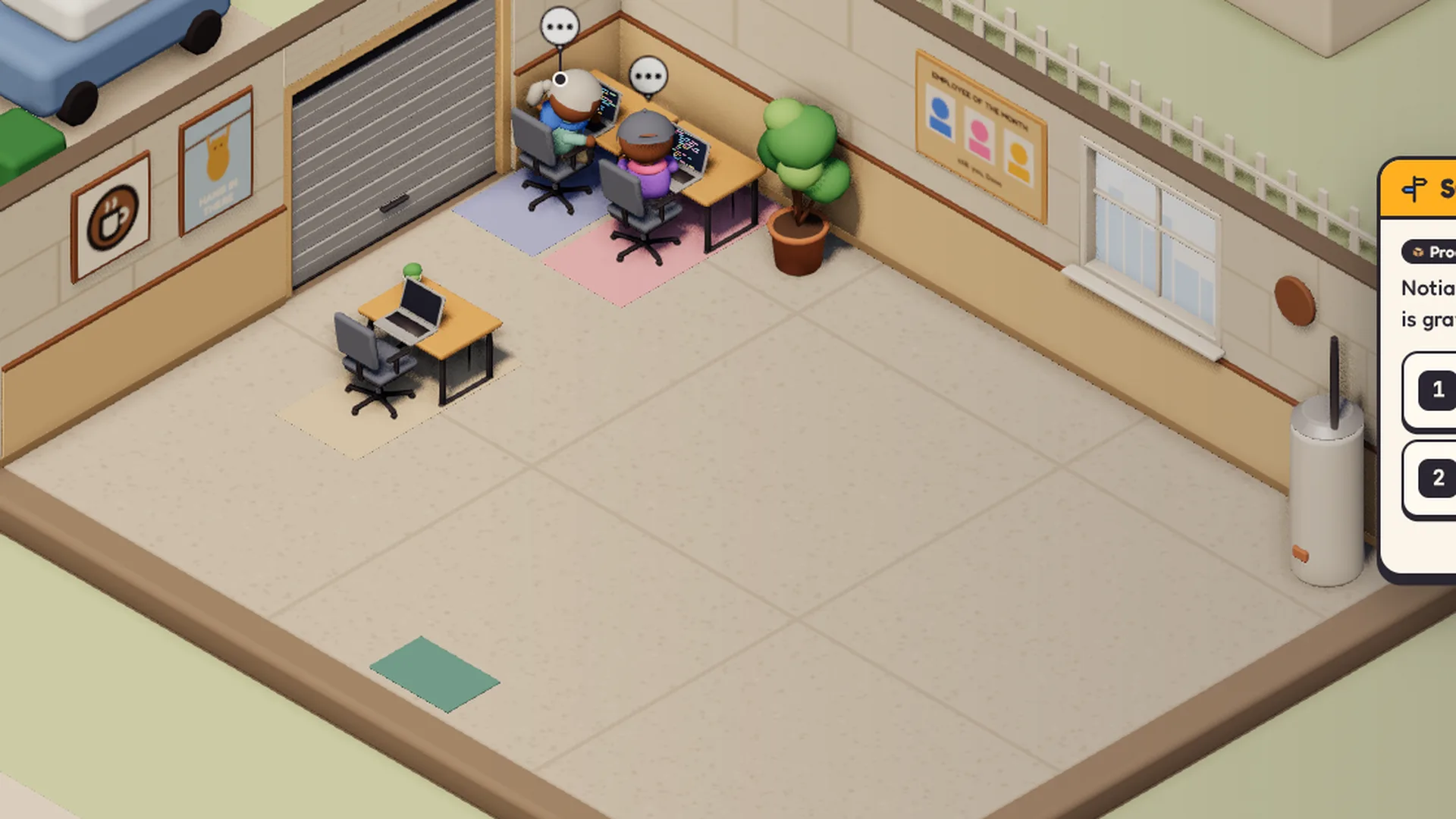
An era start picks the year your company opens. Choose Classic and you open in 2019, as always. Choose another and the office, the staff and the street outside are dressed for that decade, the chat app and the market change with it, and the game plays on through everything that follows. Start with boxed software in a garage, ride the dot-com boom and its bust, or go straight to the chatbots, the agents, the consolidation or the plateau. Earlier starts score a little less than the full Classic run, so the long career stays the prestige one.
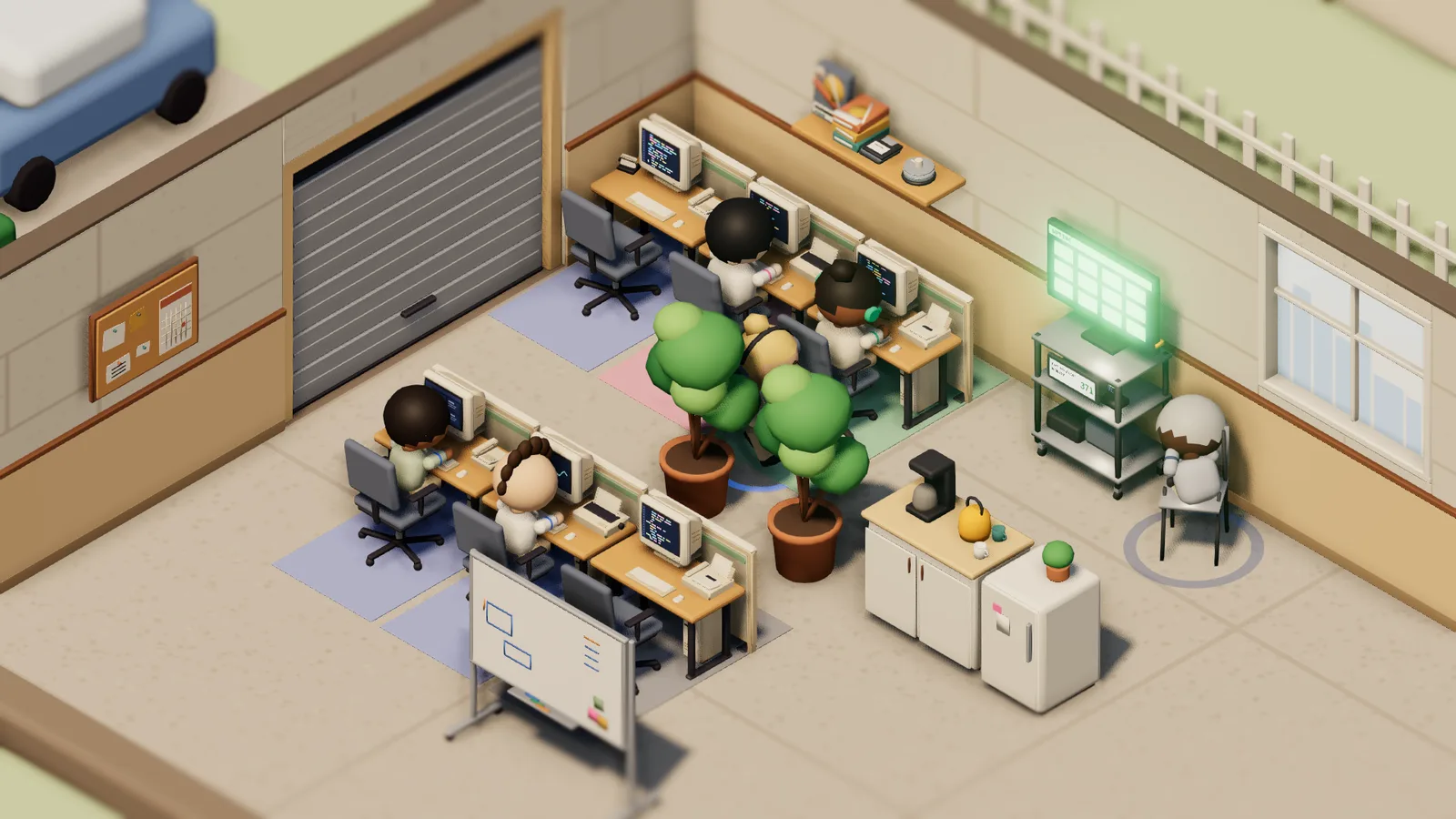
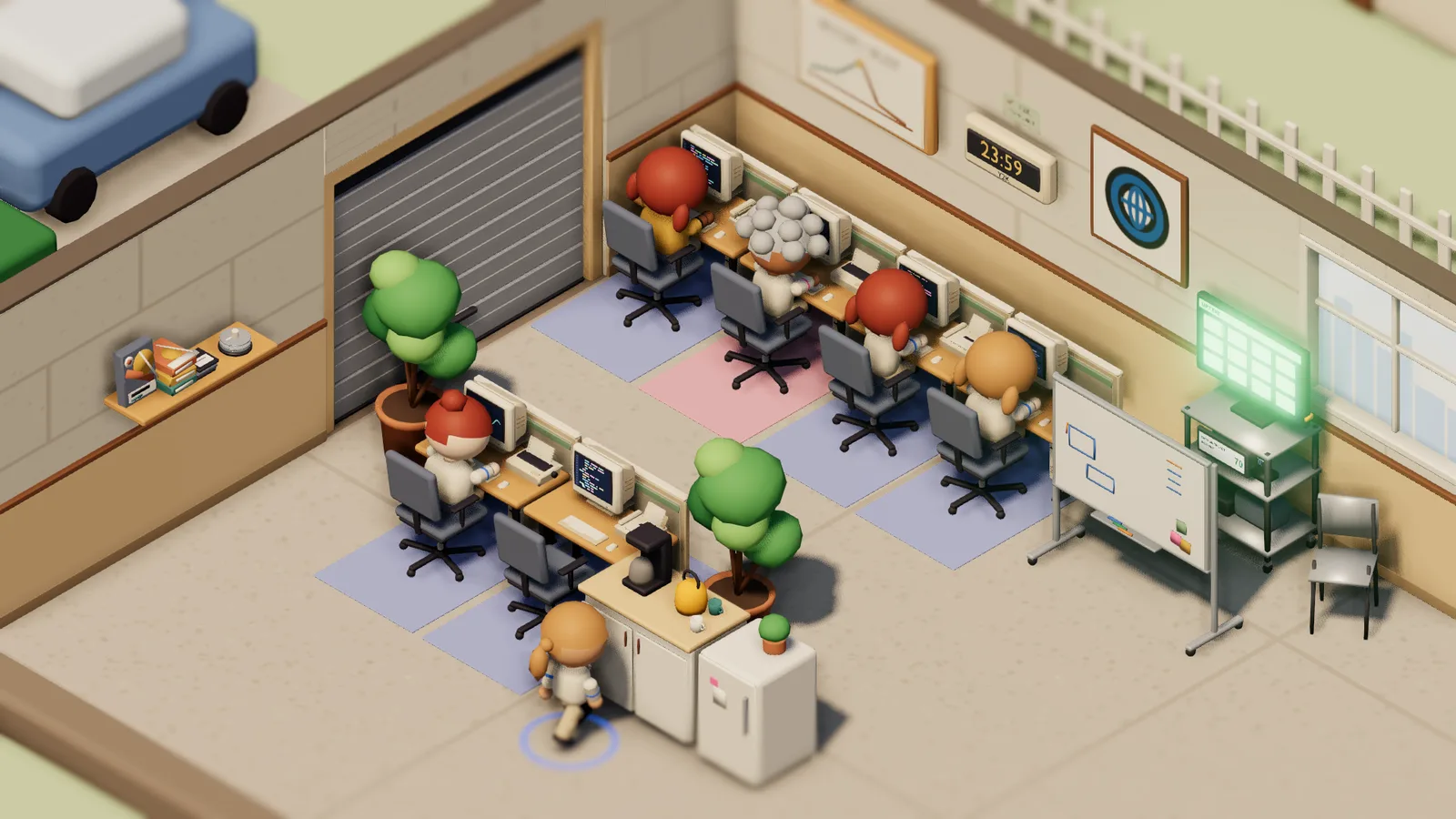
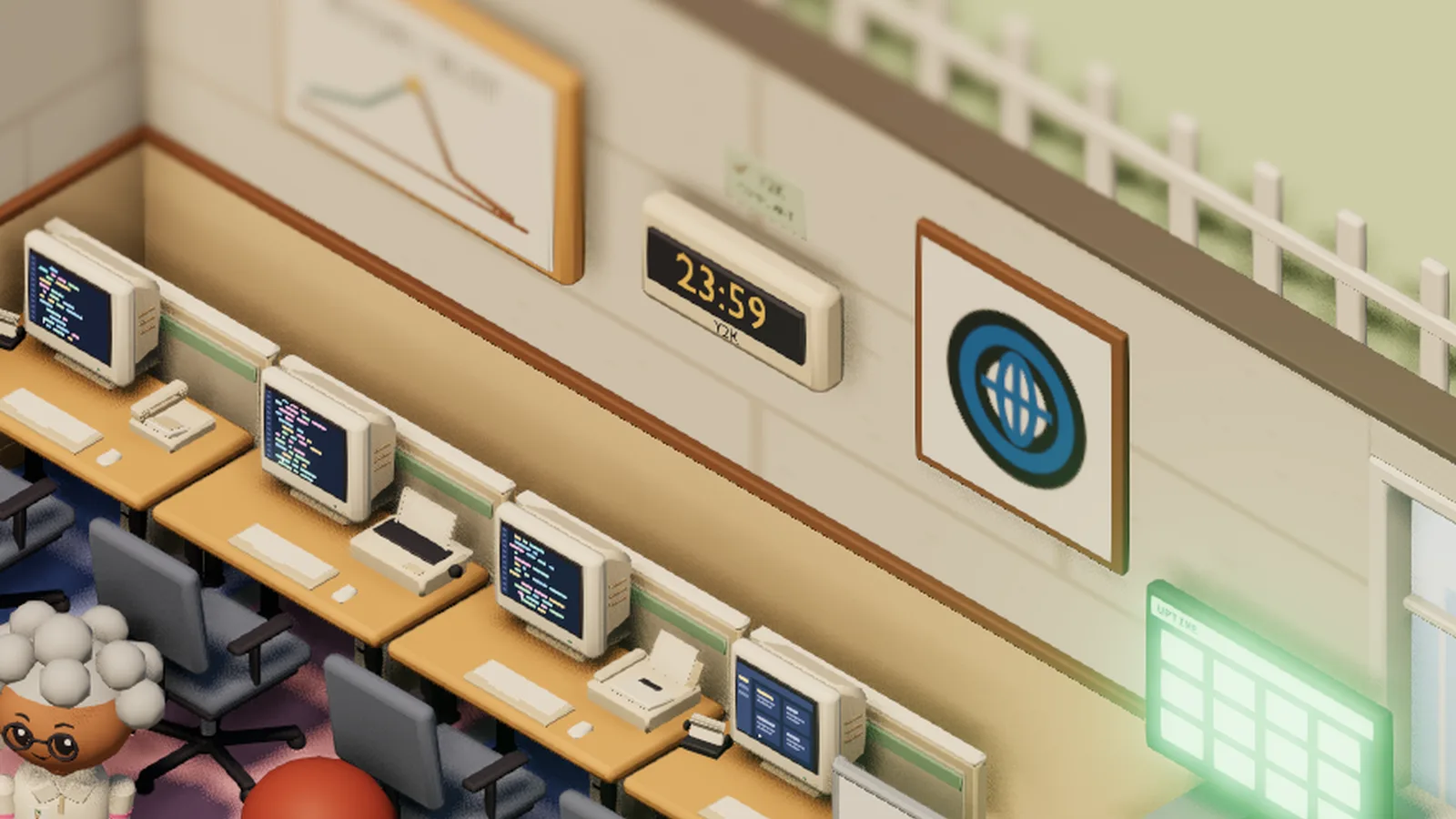
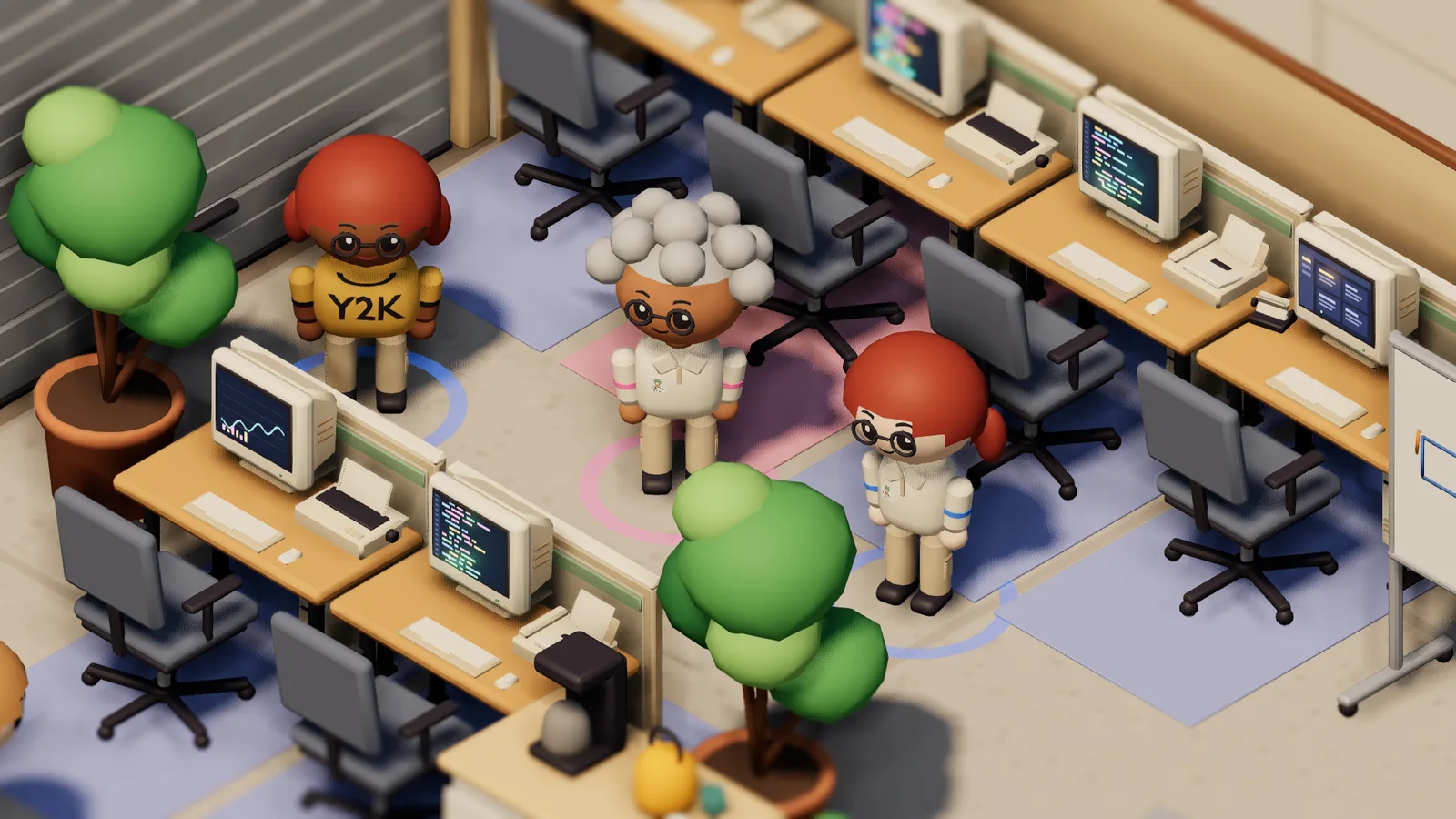

Web apps, mobile apps, APIs, and a lot of pricing pages. Nobody has heard of a large language model.

A chatbot writes a sonnet about your churn rate and the whole industry loses its mind.

The software now does the job instead of helping with it. Someone has to watch it do the job.

Everyone is buying everyone. The vendors change their prices, their models, and their minds.

Everyone has the same models now. What is left is people, taste, and whether anyone trusts you.
Swipe or use the arrows. With the gallery focused, use Left/Right or Home/End.
TechCrunchy"Twenty years of the software industry in one evening. We recognised every meeting. We had been in most of them."
The Vergence"Automate the support team and the numbers go up. So does the number of people quietly updating their LinkedOut."
Wired-ish"The first management sim where the most dangerous thing in the office is the shared printer."
Hacker Olds"Built mostly by AI agents. The commit log is scarier than the ransomware event."